Traveling with your little one can be both exciting and challenging. One of the biggest concerns you might have is how to keep your child safe and comfortable on the plane.
Traveling with your little one can be both exciting and challenging. One of the biggest concerns you might have is how to keep your child safe and comfortable on the plane.
Installing a car seat on an airplane seat might seem tricky, but it doesn’t have to be. In this guide, you will learn exactly how to install your car seat step by step, making your flight smoother and safer. By the end, you’ll feel confident and ready to travel with peace of mind.
Choosing The Right Car Seat
Choosing the right car seat for airplane travel is important for your child’s safety and comfort. Not all car seats fit well on airplanes. Some are easier to install and use during flights. Picking a seat that meets airline rules makes the trip smoother.
Faa-approved Seats
Only FAA-approved car seats are allowed on planes. These seats meet safety rules for air travel. Look for a label saying “This restraint is certified for use in motor vehicles and aircraft.” This shows the seat passed air safety tests.
Using a non-approved seat can cause problems at the gate. Airlines may not let you bring it on board. Always check this label before buying or traveling with a car seat.
Size And Weight Limits
Airplane seats are smaller than car seats. Choose a car seat that fits the airplane seat well. Measure the width and height of your airplane seat if possible.
Lightweight car seats are easier to carry through the airport. Heavy seats can be hard to handle with luggage and children. Check the weight limit for your child. The seat must support your child’s weight safely.
Types Of Car Seats
There are three main types of car seats for kids: all infant car seat guidess, convertible seats, and booster seats. Infant seats are small and designed for babies up to about 1 year old.
all convertible car seat guidess can be used rear-facing or forward-facing. They last longer but are often bigger and heavier.
all booster seat guidess are for older children who have outgrown car seats. Most airlines allow only FAA-approved seats, so check the type before traveling.
Preparing For The Flight
Preparing for a flight with a car seat needs careful planning. It helps make the journey safe and smooth for your child. Taking time before the trip reduces stress on travel day. It also ensures you follow all airline rules and have what you need ready. This section covers important steps to get ready.
Checking Airline Policies
Each airline has different rules for car seats on planes. Check their website or call customer service. Find out if the car seat is allowed and how to install it. Some airlines require approval before you board. Knowing these details stops problems at the airport.
Booking Your Seat
Choose a seat that fits the car seat well. Window seats often work best. Book early to get the spot you want. Tell the airline you will bring a car seat. This helps them prepare and give advice if needed. Seat choice affects safety and comfort during the flight.
Gathering Necessary Documents
Bring your child’s ID and the car seat manual. Some airlines ask for proof of the car seat’s safety approval. Keep boarding passes and any special permits ready. Having these documents handy speeds up security checks. It also proves you follow airline rules.
At The Airport
At the airport, managing your car seat can feel tricky. You need to keep it safe and ready for the flight. Knowing how to carry and check it can make travel easier. This section guides you through handling your car seat before boarding.
Carrying And Handling The Car Seat
Use a car seat bag for easy carrying. It protects the seat from dirt and damage. If no bag is available, hold the seat firmly by its handle. Avoid dragging or dropping it. Keep your child’s comfort in mind when moving the seat. Use both hands to keep it steady. Place the seat on a flat surface while waiting in line.
Security Screening Tips
At security, you may need to remove your child from the car seat. Carry your child separately through the scanner. The car seat usually goes through the X-ray machine. If you want, request a manual inspection. This helps avoid damage to the seat. Keep your boarding pass and ID ready. Stay calm and patient during the screening process. Quick preparation speeds up your passage through security.
Installing The Car Seat On The Airplane
Installing the car seat on the airplane ensures your child’s safety during the flight. This process is simple when done step by step. Understanding how to secure the seat properly gives you peace of mind. Follow these clear steps to make installation smooth and safe.
Selecting The Best Seat
Choose a window seat if possible. It offers extra space and less disturbance. Avoid seats near the emergency exit unless allowed. Check airline policies for car seat rules. A forward-facing seat is best for most car seats. Make sure the seat has a flat surface for the car seat base.
Securing The Car Seat With The Airplane Seatbelt
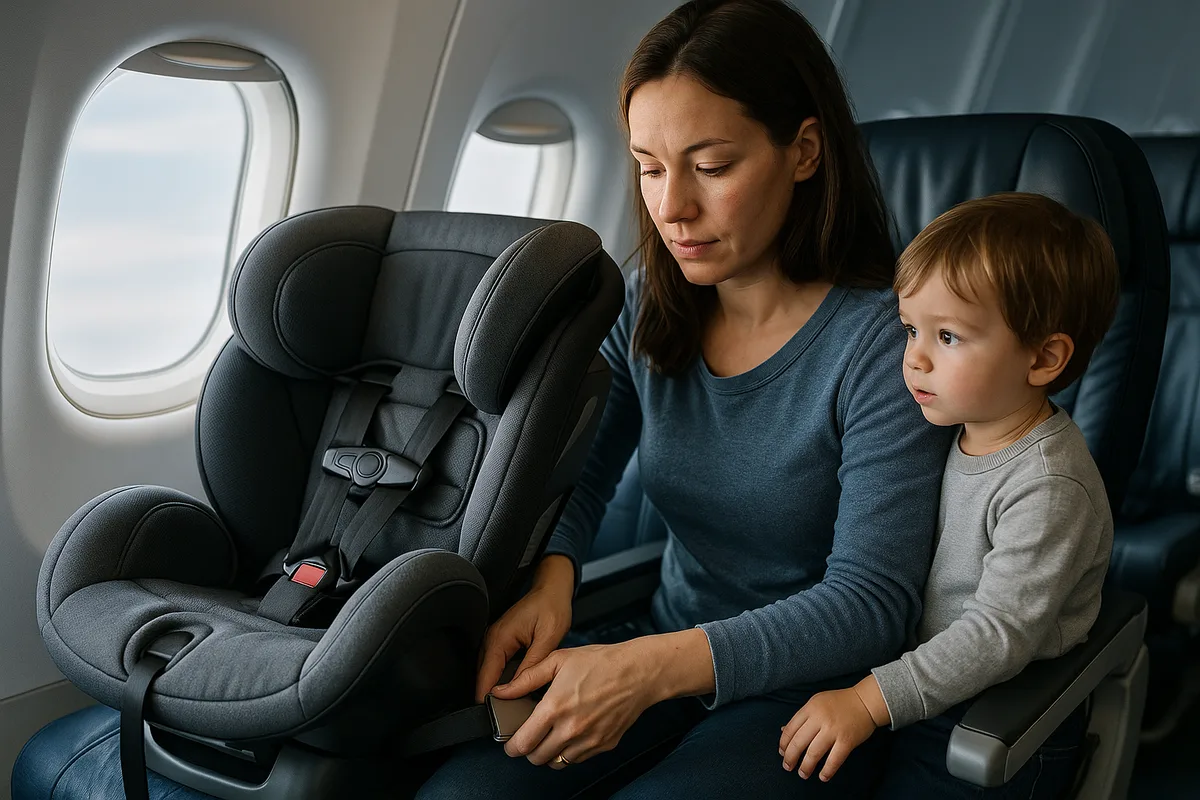
Place the car seat on the airplane seat. Thread the airplane seatbelt through the car seat belt path. Buckle the seatbelt tightly to hold the car seat in place. Pull the belt to remove any slack. Press down firmly on the car seat while tightening the belt. Double-check that the seat does not move side to side.
Adjusting For Comfort And Safety
Adjust the recline of the car seat if possible. Make sure the harness fits snugly on your child. Position the chest clip at armpit level. Check that your child sits comfortably without leaning. Ensure no straps are twisted or loose. Confirm the car seat is secure before takeoff and landing.
During The Flight
During the flight, keeping your child safe and comfortable is very important. The car seat helps protect your child during takeoff, landing, and any turbulence. Use the car seat properly to keep your child secure throughout the flight.
Keeping The Child Secure
Make sure the child is strapped in tightly. The harness should fit snugly without being too tight. Check the straps often to avoid loosening. Keep the child seated at all times when the seatbelt sign is on. Do not remove the car seat from its position during the flight. The car seat acts as a safety barrier in case of sudden movements.
Managing Car Seat Usage
Use the car seat only in the airplane seat assigned to you. Avoid moving the car seat to another seat during the flight. Follow the airline’s rules about car seat use. Some airlines require the car seat to face forward. Keep the car seat upright for maximum safety. Remove toys or loose items that may cause harm in turbulence. Stay calm and patient to help your child feel safe in the car seat.
After The Flight
After your flight, handling the car seat carefully is important. This step ensures your child’s safety and the seat’s durability. Proper care helps keep the car seat ready for the next trip.
Removing And Handling The Car Seat
Start by loosening the seatbelt or latch that holds the car seat. Gently lift the seat out of the airplane seat. Avoid dropping or hitting it against hard surfaces. Carry the seat with both hands for better control. Place it on a clean, flat surface to prevent damage.
Inspecting For Damage
Check the car seat for cracks or broken parts. Look closely at the harness, buckles, and straps. Make sure nothing is torn or loose. If you see any damage, do not use the seat until it is repaired or replaced. Safety first for your little one’s next ride.
Common Questions Parents Ask
How Do I Install A Car Seat On An Airplane?
First, check airline policies on car seat use. Secure the seat using the airplane seatbelt. Attach the car seat tightly to prevent movement during the flight. Ensure the harness is snug for your child’s safety.
Can All Car Seats Be Used On Airplanes?
Not all car seats are airplane-approved. Look for FAA approval labels on the seat. Only use seats marked as certified for aircraft use. This ensures proper fit and safety during your flight.
What Is The Best Airplane Seat For Car Seat Installation?
Window seats are best for car seat installation. They prevent blocking the aisle and provide extra safety. Ensure the seat fits well in the airplane’s seat space. This positioning also offers more privacy and comfort.
How Early Should I Arrive To Install A Car Seat?
Arrive at the airport early to allow extra time. Installing a car seat takes longer than regular seating. Early arrival helps avoid rushing and ensures a smooth boarding process. It also allows for any necessary adjustments.
Lap Child or Their Own Seat: Making the Call
Before any installation questions matter, there is a bigger decision: whether your child flies in your lap or in a purchased seat. Airlines in the United States allow children under two to fly free on a parent’s lap, and the price difference makes that tempting.
Safety guidance points the other way. Both the FAA and the American Academy of Pediatrics recommend that every child fly in their own seat in an appropriate restraint, because adult arms cannot reliably hold a child through severe turbulence or a hard landing. Turbulence is the scenario to plan for, since it can arrive without warning while drinks are being served and everyone is relaxed.
If the budget is tight, there are middle paths worth trying. Ask at check-in whether the flight has open seats, since agents will often block an empty seat next to you for a car seat at no charge on lighter flights. Flying at off-peak times improves those odds. And for toddlers who have outgrown the rear-facing stage, an FAA-approved airplane harness device can be a lighter alternative to carrying a full convertible through the terminal, though it works only for forward-facing kids within its labeled limits.
Troubleshooting a Stubborn Lap Belt Installation
Airplane lap belts behave differently from car seat belts, and a few specific tricks solve most of the struggles parents hit at row 23 with a line of passengers behind them.
- The buckle lands right in the belt path. The airplane buckle is bulky, and if it sits inside the belt path it can press against the shell and feel impossible to tighten. Slide the belt through so the buckle ends up at the side opening of the belt path rather than centered behind or under the seat.
- The belt feels too short for a rear-facing install. Ask a flight attendant for a seat belt extender. Crews carry them, and an extender often makes a rear-facing belt path reachable without wrestling.
- You cannot get it tight. Recline the aircraft seat back first, install the car seat, tighten the belt while pressing your knee or forearm into the seat, then bring the aircraft seat back upright. The seat back pushing forward locks in the last bit of tension.
- The rear-facing seat will not fit at all. Try a small recline of the aircraft seat if the crew permits it, and remember the row in front of you may be able to skip reclining instead. If it truly does not fit, ask the crew about moving to a bulkhead row where there is more depth.
Practice the whole sequence on a dining chair at home before the trip. Knowing your seat’s belt path by feel turns a sweaty ten minute struggle into a ninety second routine.
If the Seat Is Not Coming Into the Cabin, Protect It
Sometimes the car seat travels but does not get used in flight, perhaps because an older child is using the aircraft belt or you only need the seat at your destination. How you check it matters, because baggage handling is rough on plastic shells and the damage is not always visible.
Gate checking is generally gentler than counter checking since the seat spends less time on conveyors, but neither is padded handling. Use a padded car seat travel bag if you own one, and if you do not, ask the airline for a plastic bag and wrap the harness inside the shell so straps cannot snag. Stuff the bag with diapers or soft clothing to add cushioning and reclaim luggage space at the same time.
When you land, inspect the seat before installing it in any vehicle. Look for cracks in the shell, bent metal, and a buckle that no longer clicks crisply. If anything seems off, call the manufacturer before using the seat, and report damage to the airline while you are still at the airport so a claim is possible.

Graco Extend2Fit Convertible Car Seat
- Rear-facing harness from 4 to 50 lb, forward-facing harness to 65 lb
- 4-position extension panel adds up to 5 inches of legroom for longer rear-facing
- No-rethread harness and headrest adjust together in one motion
As an Amazon Associate, topcarseats.com earns from qualifying purchases at no extra cost to you.
Key Takeaways for Parents
Installing a car seat on an airplane can feel tricky at first. Follow each step carefully and take your time. Make sure the seat fits securely and follows airline rules. Double-check all straps and locks before takeoff. A safe installation helps keep your child comfortable and protected.
Practice at home to build confidence before your trip. Travel with peace of mind knowing your little one is secure. Safe travels and happy flying!