When choosing an infant car seat, focus on four things: rear-facing weight limit (aim for 30+ pounds), whether the recline adjustment is clear and lockable, how the harness adjusts as your baby grows, and whether the base installs tightly with LATCH or a seat belt in your vehicle. Everything else is convenience.
What makes an infant car seat safe
Every car seat sold in the US must pass FMVSS 213, the federal crash-test standard for child restraints. That means the seat has already passed the baseline test. The differences between seats are in convenience, install quality, longevity, and fit in your vehicle, not in whether the seat will protect your baby in a crash that meets the federal test criteria.
That is the part of the buying decision parents most often get wrong. People assume the most expensive seat is the safest. It is not. The seat that fits your vehicle tightly, is easy enough to use that you will use it correctly every time, and accommodates your baby’s growth pattern is the safest seat for you. Here is what actually matters when you are comparing options.
Features worth paying for
No-rethread harness
On older seats you have to unthread the harness from the back of the shell and move it up a slot as your baby grows. Newer seats use a no-rethread system that adjusts from the front with a simple pull. Worth the small price bump because you will adjust the harness many times over the life of the seat, and a misaligned harness is the most common cause of unsafe installs at the harness-fit step.
Clear, lockable recline indicator
Newborns need the seat at a specific recline angle (usually 30 to 45 degrees from horizontal) so their airway stays open. A visible bubble level or angle indicator makes this easy to check. Some vehicles have sloped back seats that force you to use the seat’s built-in recline adjusters or a tightly-rolled towel under the front of the base. If the angle is wrong, your baby’s chin can drop to their chest and restrict breathing, which is why the recline check is non-negotiable.
European belt path (optional but useful)
When you need to install the seat without the base (for example, in a rental car or a rideshare), a European belt path routes the seat belt around the back of the shell, which gives a much tighter install than the American belt path alone. See our detailed guide on installing an infant seat without the base. If you travel often or use rideshare regularly, prioritize a seat with this option.
High rear-facing weight limit
An infant seat with a 35-pound rear-facing limit gives you more runway before you need to buy a convertible seat. Most babies stay in an infant seat until they hit the height limit (top of head within one inch of the shell), not the weight limit, but a higher weight limit still matters for bigger babies. Plan for the seat to last 9 to 15 months in active use.
Base versus carry-only seats
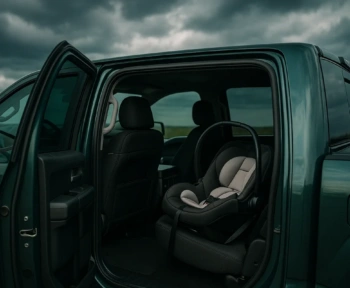
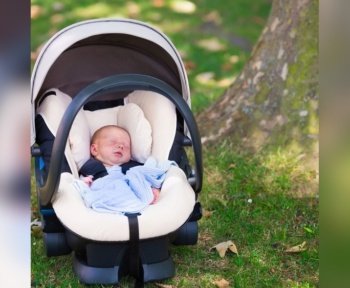
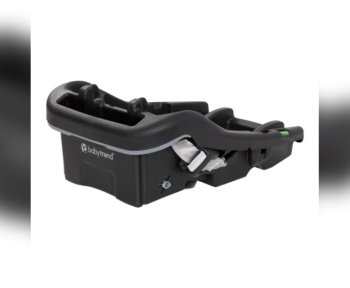
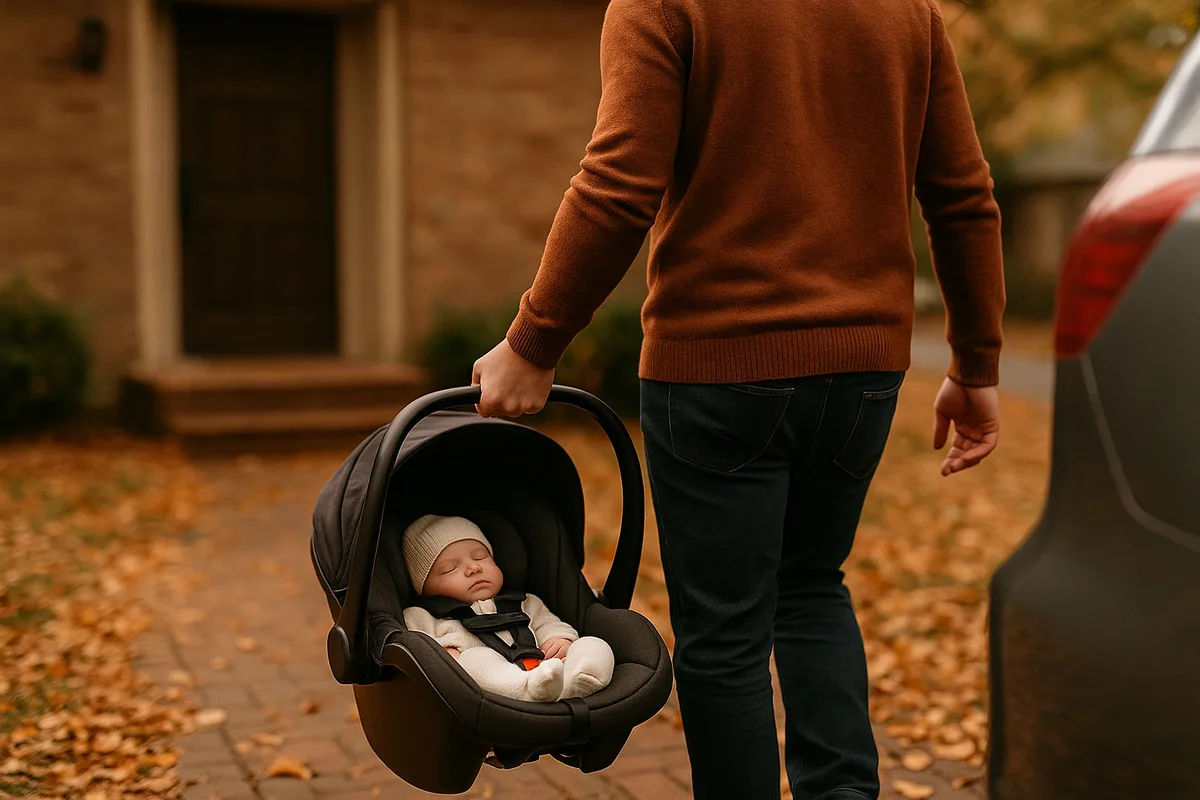
Most infant seats come with a removable base that stays installed in your vehicle. The seat clicks in and out of the base, which makes it easy to carry a sleeping baby into the house and click into a stroller frame for walks. If you have two vehicles you regularly drive (yours and a partner’s), buy a second base rather than reinstalling once a week. Bases run roughly half the cost of a full seat.
Some parents skip the base entirely and install the seat directly with the seat belt every time. This works, but it adds 5 to 10 minutes to every trip and is harder to do tightly. Reserve baseless installs for travel, rideshare, and emergencies, not your daily driver.
Stroller travel system compatibility
Most major stroller brands (UPPAbaby, Nuna, Bugaboo, Doona, Graco, Chicco, Britax) publish compatibility charts showing which infant car seats click into their stroller frames with or without an adapter. Check the chart before you buy, not after. The travel-system click-in is convenience, not safety, but it is the convenience that matters most in the first 6 months when your baby naps in the car and you do not want to wake them transferring to a stroller.
Three things to check: does it click in without an adapter (best), does it require an adapter that the stroller brand sells (fine), or does it require a third-party adapter (worse, often less stable). One common pitfall: parents buy a high-end stroller and a high-end car seat from different brands, then discover after the baby arrives that no adapter exists. Buy the stroller and seat together where possible.
Features that are nice-to-have
- Anti-rebound bar. A padded bar at the foot of the base that limits how far the seat rebounds toward the front of the vehicle in a crash. Makes a small but measurable difference in IIHS tests.
- Push-button LATCH connectors. Cheaper than a whole new seat. They make base removal much easier when you are switching vehicles.
- Load leg. A metal leg that extends from the base to the floor of the vehicle, which reduces crash forces transmitted to the seat. Common on European-style seats and worth the price for parents in larger vehicles where the back seat well supports a load leg properly.
- Stroller compatibility. Check that the seat clicks into a stroller frame you already own or plan to buy. The click-in is pure convenience, not a safety feature.
Features that do NOT matter for safety
- Fabric color or pattern
- Cup holders or phone holders on the base
- Premium branding or price tier (all seats sold legally in the US pass FMVSS 213)
- Weight of the carry handle (unless it is so heavy you will not use it correctly)
- Extended warranty
- Smart-connected features that pair with a phone app
Will it fit your vehicle?
The single biggest predictor of a tight, safe install is fit in your specific vehicle. Before committing to a seat, try to test-fit it in your back seat. Many baby stores allow this. Three things to check:
- Does the base sit level on your back seat without a pool noodle or towel wedge? Some vehicles need one, some do not. Check the seat manual to confirm what your specific seat allows.
- Can you reach the LATCH anchors (or seat belt routing) without contorting yourself? You will be doing this in the dark, in the rain, in a parking garage. Easy access matters.
- Does the base leave enough room for the front passenger seat to be at its normal driving position? In small cars and pickup trucks, an infant seat installed behind the front passenger can force the seat all the way forward.
Common installation pitfalls
- Recline too upright. A newborn whose chin drops to their chest has a restricted airway. Use the seat’s level indicator to confirm the angle.
- Carry handle position. Most seats require the carry handle in a specific position when installed in the vehicle. Check the manual. Some require it down, some up, some at any position.
- Base not locked into the click. Easy to miss when you are tired. Press hard until you hear the audible click on both LATCH connectors.
- Seat clipped into base loosely. When clicking the seat into the base, listen for the click and then pull up firmly to confirm it is locked.
- Skipping the manual. Every infant seat is a little different. Read the manual once, then keep it in the seat pocket for reference.
When to move on from the infant seat
Your baby has outgrown the infant seat when the top of their head is within one inch of the shell, OR they hit the weight limit, OR the harness no longer stays at or below the shoulders. Read our detailed signals guide: when is baby too big for the infant car seat.
At that point, move to a rear-facing convertible seat. Do NOT turn forward yet. See our infant-to-convertible transition guide and the convertible buyer’s guide.
The bottom line
A good infant car seat does three things well: it installs tightly in your vehicle, it adjusts easily as your baby grows, and it clicks in and out of the base without becoming a struggle. Everything else is personal preference. If you are torn between two models that both fit your vehicle, the one with the higher rear-facing weight limit and the no-rethread harness is usually the better long-term choice.
When your new seat arrives, find a free CPST through Safe Kids and get the first install checked in person. It is worth it.

Chicco KeyFit Max Zip ClearTex Infant Car Seat
- Anti-rebound bar and 5-position headrest help maximize rear-facing time
- Two bubble level indicators and premium LATCH for an accurate base install
- Flame retardant-free ClearTex fabrics, GREENGUARD Gold certified
As an Amazon Associate, topcarseats.com earns from qualifying purchases at no extra cost to you.
Common Questions Parents Ask
How long will my baby use an infant car seat?
Most babies use an infant seat for 9 to 15 months, until the top of their head is within one inch of the shell or they hit the seat’s weight limit. Bigger babies graduate sooner; smaller babies may stay until 18 months.
Do I need to buy the matching base?
The base usually comes with the seat. Buy a second base if you regularly drive a second vehicle. Reinstalling the base every time you switch cars is tedious enough that families either skip it or do it loosely.
Can I use an infant seat without the base?
Yes. Every infant seat is approved for installation directly with the vehicle seat belt, no base required. It takes longer and is harder to get tight, so use it for travel and rideshare rather than your daily driver.
Is it safe to buy a used infant car seat?
Generally no, unless you know the full history. Used seats may have been in a crash, may be expired, or may be missing parts. Read our full guide on used car seat safety for the exceptions.
When does the infant seat expire?
Most infant seats expire 6 years from the manufacture date stamped on the shell. After that, the plastic may have degraded enough to fail in a crash. See our guide on why car seats expire.
Should I prioritize travel system compatibility?
If you plan to use a stroller frequently in the first 6 months, yes. The click-in convenience is significant when transferring a sleeping baby. Always confirm compatibility on the stroller brand’s official chart before buying.
Primary Sources
This article is cross-referenced against the following primary sources.
- NHTSA Car Seats & Booster Seats, Federal guidance and FMVSS 213. nhtsa.gov
- AAP HealthyChildren, Infant Car Seats, Pediatric guidance for infants. healthychildren.org
- Safe Kids Worldwide, Free CPST install inspection stations. safekids.org
- IIHS Child Safety Research, Independent evaluations of infant seats. iihs.org