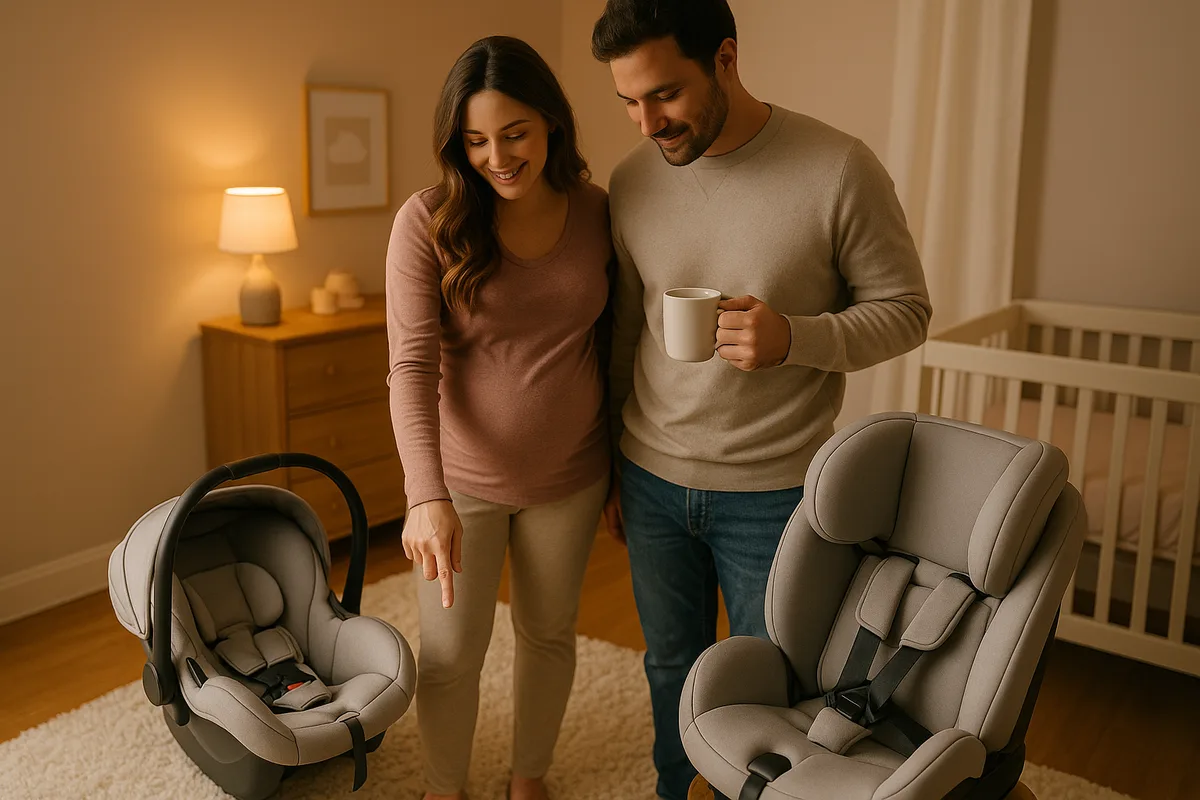
You want to keep your baby safe, comfortable, and secure every time you hit the road.
Choosing the right car seat for your little one is one of the most important decisions you’ll make as a parent. You want to keep your baby safe, comfortable, and secure every time you hit the road.
But with so many options out there, especially between infant and all convertible car seat guidess, it can feel overwhelming. Which one fits your needs best? Which will grow with your child? And how can you be sure you’re making the safest choice?
Key Differences
Choosing the right car seat keeps your child safe and comfortable. Infant and convertible car seats serve different needs. Knowing their key differences helps you pick the best option. This section highlights the main points that separate these two types of seats.
Design And Usage
all infant car seat guidess are small and portable. They have a handle for easy carrying. Designed for newborns, they face rearward only. Convertible seats are bigger and heavier. They can switch from rear-facing to forward-facing. This lets your child use one seat longer.
Weight And Height Limits
Infant seats usually fit babies up to 22-35 pounds. Height limits are lower, around 30 inches. Convertible seats accept heavier children, often up to 65 pounds. They also have higher height limits. This allows use from infancy through toddler years.
Installation Methods
Infant seats often come with a base that stays in the car. The seat clicks in and out of this base. This makes it easy to move the baby without reinstalling. Convertible seats install directly with seat belts or LATCH. They stay fixed in the car for longer periods.
Safety Considerations
Safety is the top priority when choosing a car seat for your child. Both infant and convertible car seats offer protection but differ in features. Understanding key safety aspects helps you make the best choice for your baby’s needs.
Examining crash test ratings, harness systems, and side impact protection can guide your decision. These factors show how well the seat protects your child in real accidents.
Crash Test Ratings
Crash test ratings measure how a car seat performs in a crash. Independent organizations run tests to check impact forces on dummies. Higher ratings mean better safety performance. Always choose seats with good crash test results. This gives you peace of mind on every trip.
Harness Systems
Harness systems keep your child secure and reduce injury risks. Infant seats often have a 5-point harness that fits small babies well. Convertible seats also use 5-point harnesses but adjust for bigger kids. Check that the harness is easy to tighten and adjust. Proper fit is key to effective protection.
Side Impact Protection
Side impact crashes cause many injuries in children. Car seats with side impact protection absorb forces and shield your child’s head and chest. Look for extra padding or energy-absorbing materials on the sides. Both infant and convertible seats offer this feature. Make sure the seat you pick includes strong side impact protection.
Convenience Factors
Choosing the right car seat involves many convenience factors. These factors affect daily use and comfort. Consider how easy the seat is to move, install, and adjust. These points help you decide between an infant or convertible car seat.
Portability
Infant car seats are lightweight and easy to carry. They often come with a handle for quick moves. Parents can take the seat in and out of the car fast. Convertible car seats are heavier and stay in the car longer. Portability matters if you travel a lot or need quick trips.
Ease Of Installation
Infant seats usually install with a base that stays in the car. You can click the seat in and out easily. This quick installation suits busy parents. Convertible seats require more effort to install. They must be secured tightly for safety. Check if the seat has clear instructions and simple locking systems.
Adjustability
Convertible seats grow with your child and offer many recline positions. You can adjust straps and headrests to fit your child’s size. Infant seats have limited adjustability and work for babies only. Adjustability helps keep your child comfortable during rides.
Budget And Longevity
Choosing between an infant and convertible car seat depends a lot on budget and how long the seat will last. These factors affect your cost and the value you get from the seat. It is important to balance what you pay now with how long your child can use the seat safely.
Think about the money you spend first. Some seats cost more but last longer. Others cost less but need replacing sooner. Knowing this helps you pick a seat that fits your budget and needs.
Initial Cost
Infant car seats usually cost less upfront. They are smaller and made just for babies. Convertible seats often cost more because they can grow with your child. This means you pay more at first but may save money later.
Lifespan And Growth
Infant seats fit babies from birth to about one year. Convertible seats cover a longer time. They start as rear-facing for babies and switch to forward-facing for toddlers. This means one seat can last for years.
Resale Value
Convertible seats often keep their value better. Parents want seats that last and grow with their child. Infant seats may lose value faster because they are used for a short time. You can sell a convertible seat later and get some money back.
Lifestyle And Usage
Choosing the right car seat depends a lot on your lifestyle and how you use it. Your daily habits, travel needs, and family situation all affect this choice. Understanding these factors helps pick the best seat for safety and comfort.
Frequency Of Travel
How often you travel affects your choice. If you take short trips or use the car seat daily, convenience matters. Infant car seats are easy to carry and move between cars. Convertible seats stay in one car and grow with your child. Think about how often you travel and how long your trips are.
Vehicle Compatibility
Not every car seat fits all cars. Check your car’s size and seat shape. Infant seats are usually smaller and fit well in most vehicles. Convertible seats can be larger and need more space. Make sure the seat you choose fits well and installs safely in your car.
Family Needs
Consider your family size and lifestyle. If you have more children, a convertible seat may be better. It saves space and lasts longer. Infant seats work well for newborns and short use. Think about your family’s future needs and how long you want to use the seat.
Expert Buying Tips
Choosing the right car seat is important for your baby’s safety. Expert tips help you pick the best option between infant and convertible seats. These tips focus on safety and fit, making your decision easier.
Check Expiration Dates
why car seats expire after a few years. Check the label for the expiration date. Do not buy a seat that is close to or past this date. Expired seats may not protect your child well.
Look For Certification Labels
Safety certification shows the seat meets rules. Look for labels like JPMA or FMVSS 213. These certifications mean the seat passed crash tests. Buy only seats with proper certification labels.
Test Fit Before Purchase
Fit is key for safety and comfort. Try fitting the seat in your car before buying. Check if it installs easily and fits tightly. Also, see how your child sits in the seat. A good fit keeps your child safe and comfortable.
Common Questions Parents Ask
What Are The Main Differences Between Infant And Convertible Car Seats?
Infant car seats are rear-facing and portable, designed for newborns. Convertible seats grow with your child, switching from rear to forward-facing. Choosing depends on your child’s age, weight, and convenience needs.
When Should I Switch From Infant To Convertible Car Seat?
Switch to a convertible seat when your baby outgrows the infant seat’s height or weight limits. Usually, this happens around 12 months or 20-30 pounds, ensuring safety and comfort.
Are Convertible Car Seats Safer Than Infant Car Seats?
Both seats meet safety standards, but infant seats offer better newborn support. Convertible seats provide longer use and adaptability, maintaining safety as your child grows.
Can I Use An Infant Car Seat For Toddlers?
No, infant car seats are designed for babies up to about 30 pounds. Toddlers need convertible seats that accommodate higher weight and allow forward-facing positions.
The Two Paths Most Families Actually Take
In practice this is rarely a permanent either-or decision. Most families end up on one of two paths, and naming them makes the choice clearer.
Path one is the classic sequence: an infant seat for roughly the first year, then a convertible after that. You pay for two seats, but you get the click-in carrier convenience during the newborn stage, when transferring a sleeping baby without waking them feels like a superpower. The convertible then carries your child through the toddler years.
Path two is convertible from day one. Many convertibles accept newborns at their minimum weight, often with an infant insert, and this path means buying one seat instead of two. The tradeoff is that the seat never leaves the car. You will unbuckle and lift your baby out for every single errand, and there is no travel system, no carrying a sleeping baby inside, and no quick transfers between vehicles.
Neither path is safer than the other when the seat fits the child and is installed correctly. The honest question is which inconvenience bothers you less: paying for a second seat later, or losing the carrier convenience now.
Match the Seat to Your Actual Week
Forget the spec sheets for a moment and picture a normal week with your baby. The right starting seat usually falls out of that picture on its own.
| Your Situation | Better Starting Point | Why |
|---|---|---|
| Lots of errands, baby in and out of the car constantly | Infant seat | Click-in carrier saves dozens of buckle cycles a week |
| Baby born small or early | Infant seat | Lower minimum weights and snugger newborn fit |
| One car, mostly short local drives | Convertible from birth | One purchase, seat never needs to move |
| Two cars or frequent grandparent pickups | Infant seat with extra base | Carrier moves between vehicles in seconds |
| Tight budget, want to buy once | Convertible from birth | Single seat covers infancy through toddlerhood |
| Frequent flyers | Infant seat | Lighter to carry through airports and easier to install in unfamiliar cars |
If two rows describe you and point in opposite directions, weight the row that describes your daily routine over the one that describes occasional events. You live with the daily choice every single day.
Mistakes to Avoid When the Switch Finally Comes
However you start, almost everyone eventually moves to a convertible. A few predictable mistakes show up at that transition, and all of them are avoidable.
- Riding the infant seat too long. Most babies outgrow infant seats by height before weight. When the top of your baby’s head gets within about an inch of the top of the shell, or their height passes the limit on the label, it is time, even if the weight limit is far away.
- Treating the switch as permission to face forward. Moving to a convertible does not mean turning around. Install the new seat rear facing, since the American Academy of Pediatrics recommends rear facing as long as possible within the seat’s limits.
- Buying the convertible the week you need it. Shop a month or two early so you can test the fit in your actual car, return it if it does not work, and install it without time pressure.
- Skipping the practice install. A convertible installs differently than an infant base. Do the first installation on a calm weekend, read the manual cover to cover, and have the work checked by a certified technician if one is available nearby.
- Assuming the harness settings carry over. Recheck strap height, chest clip position, and recline angle from scratch on the new seat. Each model fits differently.
Handled early and calmly, the switch is a non-event. Handled in a rushed weekend after a growth spurt, it is where fit errors creep in.

Chicco KeyFit Max Zip ClearTex Infant Car Seat
- Anti-rebound bar and 5-position headrest help maximize rear-facing time
- Two bubble level indicators and premium LATCH for an accurate base install
- Flame retardant-free ClearTex fabrics, GREENGUARD Gold certified
As an Amazon Associate, topcarseats.com earns from qualifying purchases at no extra cost to you.
Key Takeaways for Parents
Choosing between an infant and convertible car seat depends on your needs. Infant seats are smaller and easy to carry. Convertible seats grow with your child and last longer. Think about your budget, space, and how long you want to use the seat.
Safety is the top priority in every choice. Trust your instincts and pick what feels right for your family. Keep your child secure and comfortable on every trip. Simple steps lead to smart decisions. Your baby’s safety matters most.